
Kenosha Inmate Population Search
Kenosha inmate population searches start with the city police and the county jail, then move to the court record if the name is not on the live roster. Kenosha is one of the cities where the custody trail can stay split between the arresting agency and the jail system. The county tool even has an archive path, so older cases can still be reachable after a release or transfer. If you know the name, date, or inmate number, the search goes faster. If you do not, the county and court systems together usually still give you the trail.
Kenosha Inmate Population and Jail Search
The Kenosha Police Department is the city entry point. Its page at kenosha.org/departments/police gives the arrest side of the record. The image on this page comes from the Kenosha Police Department and shows the city side of the search path.

Kenosha County runs the inmate search at kenoshacountywi.gov/1185/Inmate-Search. The research notes both current and archive search options, including records before 05/02/2017. It also notes a removal option. That makes the county tool more than a live roster. It is also a way to trace older custody records after the booking has ended.
The county search path is strongest when you already have a name or inmate number. If you do not, the archive side can still help. A record can remain visible even after release, and the county says there is a process for purging a record in some cases, such as a not guilty finding or a dismissal.
Use a short search set to avoid bad hits.
- Full first and last name
- Inmate number or booking number
- Date of birth
- Whether you want current or archive results
- Approximate arrest date
Kenosha Inmate Population and County Roster
The county image on this page comes from Kenosha County's inmate search page. It is the best visual match for the live and archive custody path.
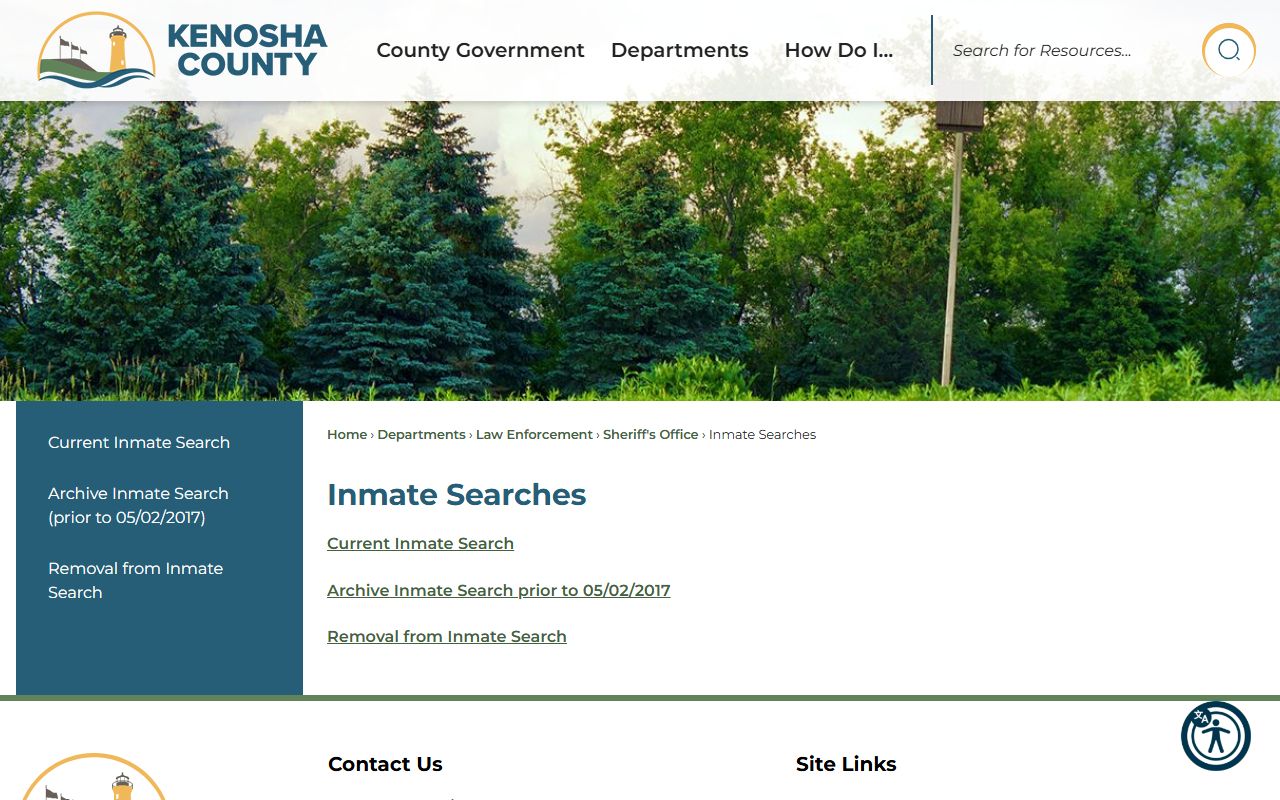
That county roster is the key layer for a Kenosha search. It shows why a city arrest can end up in a county tool even when the city made the stop.
Kenosha Inmate Population and City Records
Kenosha police work with the county sheriff for detention, so the city file and the jail file are connected. WCCA at wcca.wicourts.gov is the next step when the county roster no longer shows the person. It shows criminal case status, charges, and disposition. That is useful if the arrest has already moved to court or if the jail side has gone quiet.
The city search can also lead back to a county office. If a person is no longer in the live roster, the archive path may still show the old record. That is why Kenosha is one of the cities where a court search and a jail search should be run together. They answer different parts of the same question.
When you need to know where a case landed, check the court record first. If it was dismissed or did not lead to a conviction, the county archive still matters. If it turned into a sentence, the DOC trail can pick it up next.
The archive side is one reason Kenosha searches do not end with the first result. A release does not mean the record is gone. It can still sit in the older search path, and the docket can still show how the case ended.
Kenosha Inmate Population and State Records
The Wisconsin DOC Offender Locator at appsdoc.wi.gov/lop/welcome is the best state fallback when a person is no longer in county custody. It covers prison, parole, probation, discharged offenders, and people who have absconded or escaped. That matters in Kenosha because a county booking can become a state supervision case in a short time.
The DOC chapter pages also help explain the state side. Wis. Stat. Chapter 301 covers the DOC framework, and Wis. Stat. Chapter 302 covers prisons and inmate records. The DOC adult institutions page at doc.wi.gov/Pages/OffenderInformation/AdultInstitutions/AdultFacilities.aspx helps if the person has moved from county jail to a state institution.
For victims or family members who want movement alerts, use NOTIS/VINE. If the case is federal, use bop.gov/inmateloc. Kenosha searches work best when you check county first, then state, then federal if needed.
Public Records for Kenosha Inmate Population
Wisconsin public records law supports the search. Under Wis. Stat. § 19.35, the public can inspect records unless a clear exception applies. The Wisconsin State Law Library at wilawlibrary.gov/topics/records.php and the Wisconsin Department of Justice Office of Open Government at doj.state.wi.us/office-open-government both explain how to make a good request.
Kenosha also shows why an archive path matters. A person can still have a public record after release, and the county notes a removal process in some cases. If you are asking for a booking sheet or a case record, keep the request narrow. Name the person, the date, and the record type. That is the quickest way to get the right file.
For a larger county context, the Wisconsin Counties Association at wicounties.org explains how county jail systems vary. Kenosha uses a mix of city, county, court, and DOC layers. The right record is often there. It just may live in a different place than you expected.
When the live roster is not enough, use the archive, then the docket, then the state locator. That order gives you the cleanest Kenosha inmate population trail without wasting time on the wrong office.
If you already know the arrest date, include it in the request. A date helps trim the archive search and keeps the county from sending a broad batch when you only need one file.